
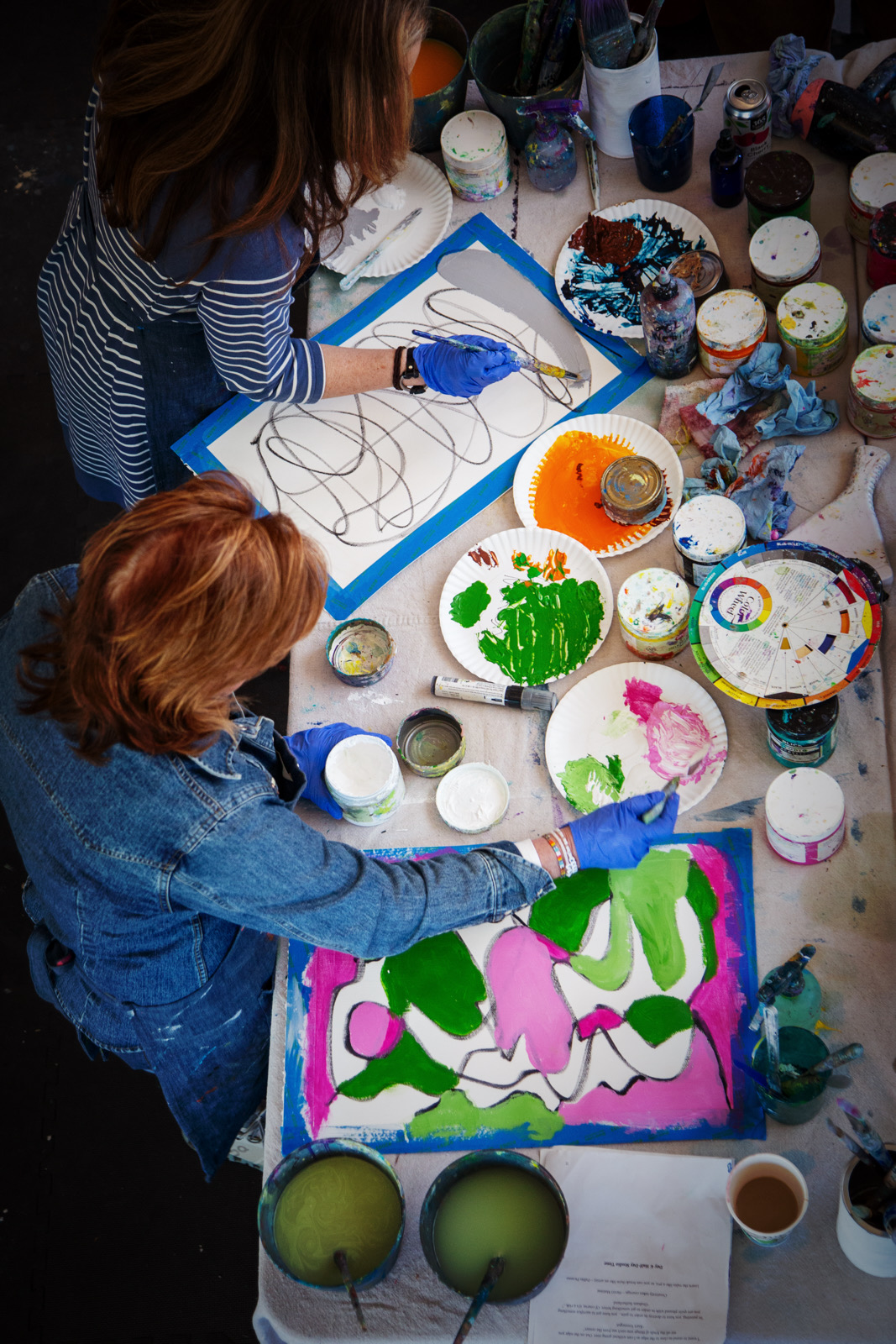
“I thought abstraction was no rules, but in fact there are so many guidelines.”
That’s a direct quote from one of my students, from a focus group I ran with a group of abstract painters not long ago. I asked them to be honest about where they get stuck, and this belief came up again and again, in almost the exact same words, from painters at every level of experience. Beginners said it. Painters who’d been at this for years said it too.
I’ve heard some version of it more times than I can count over 25+ years of teaching.
Almost every self-taught abstract painter starts out believing the same thing: abstraction means no rules. No structure. No right or wrong. Just freedom.
I understand why. If you came from realism, abstraction can feel like the great escape — no more getting the eyes exactly right, no more measuring proportions, no more matching a reference photo. It feels like permission to finally let go. One of my students described her own start this way — she’d spent years painting portraits, feeling boxed in by the pressure to get every feature “correct.” Abstraction felt like the exhale she’d been waiting for.
And then you actually sit down to paint. And something feels off. The composition doesn’t hold together. The color goes muddy. You love a piece and don’t fully know why. The next one falls apart and you don’t know why that happened either. You start to wonder if maybe you’re just not “getting it” the way other people seem to.
Here’s the truth: it’s not that there are no rules. It’s that nobody explained the ones that actually exist.
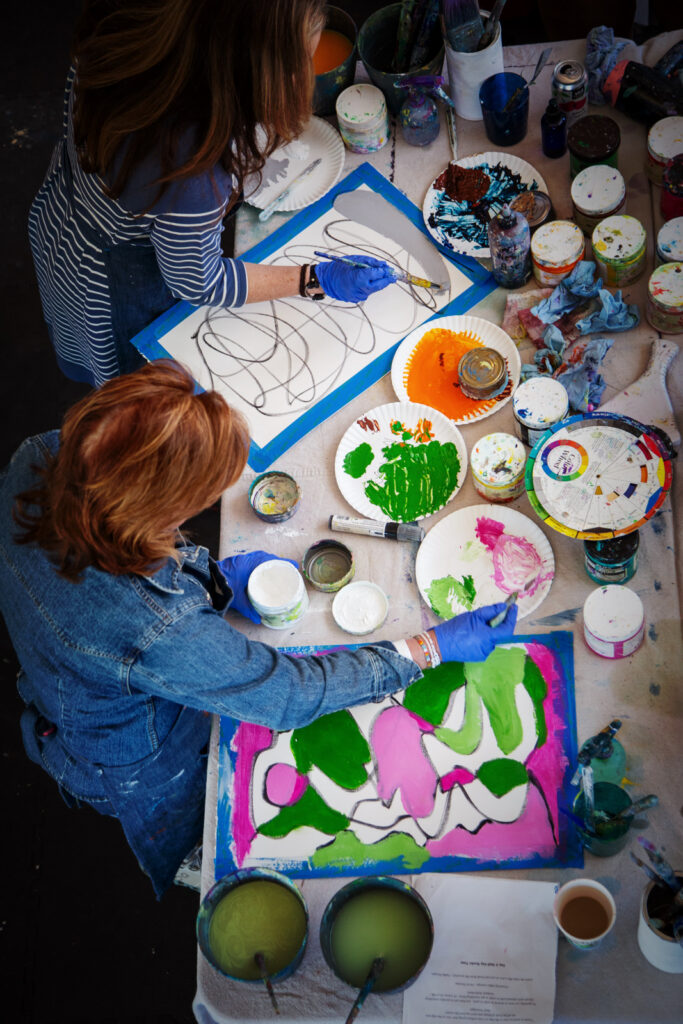
Freedom Isn’t the Absence of Principles
This is the piece most people miss.
Abstract painting isn’t a free-for-all. It still relies on composition, value, color relationships, balance, and focal point — all the same foundational principles that govern any strong painting, representational or not. The difference is that in abstraction, those principles are doing all the work. There’s no recognizable subject to lean on and distract the eye. No vase of flowers to hide behind if the composition is weak. No mountain or shoreline to reassure the viewer that the painting “makes sense.”
That’s exactly why abstraction feels harder before it feels freer. You’ve taken away the crutch, and what’s left is just the bones of the painting — which means the bones have to be right.
I see this play out constantly with students who come to abstraction from a landscape background especially. They know how to paint a mountain, a horizon line, a stand of aspens. But the moment they try to abstract that same scene, they lose their footing. Not because they’ve lost their skill — but because the rules they were unconsciously relying on (a horizon line to anchor the eye, recognizable shapes to create depth) are suddenly gone, and nothing has replaced them yet.
Freedom Comes From Understanding Them
Here’s what I know after 30 years in the studio and 25+ years of teaching this: the artists who paint with real freedom aren’t the ones who ignore principles. They’re the ones who understand them so well that the principles have become second nature.
What looks like intuition in an experienced painter is really internalized knowledge. When a painter instinctively knows a composition isn’t working, they’re not guessing — they’re drawing on a deep understanding of visual weight, focal points, and balance, even if they couldn’t stop and explain it to you mid-brushstroke. That instinct didn’t arrive by accident. It was built, one understood principle at a time.
You’re not missing a talent. You’re missing the framework. And frameworks are learnable.
This is also why so many self-taught painters describe the same frustrating pattern: they’ll finish a piece they genuinely love, and when someone asks what’s working about it, they can’t answer. They stumbled into something good without understanding why. Which means they can’t repeat it on purpose. That’s not a talent gap. That’s a knowledge gap — and it’s the exact gap that closes once you understand the principles behind what you’re doing.
Once you understand why a mark works, why a color relationship holds together, why a composition feels resolved — that’s when abstraction actually starts to feel like freedom. Not before. The rules aren’t the opposite of creative freedom. They’re what makes it possible.
Where This Shows Up Most in Landscapes
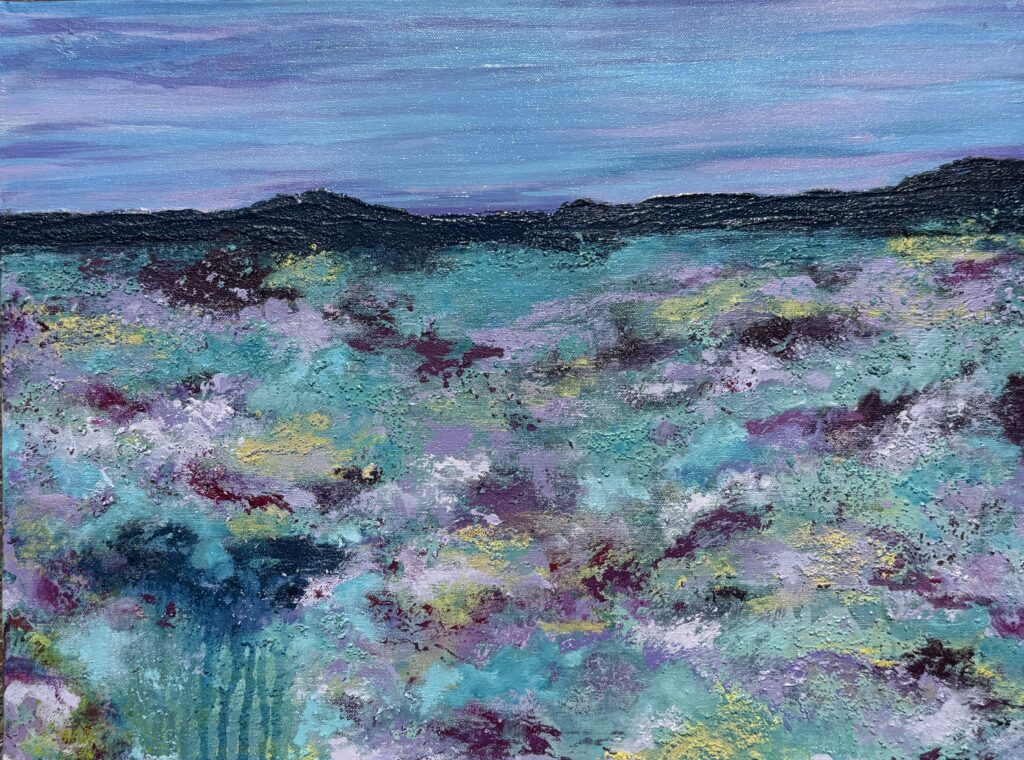
Abstract landscapes are one of the clearest places I see this myth do damage. Painters assume that because they’re abstracting a familiar subject, they can just “loosen up” and the painting will find itself. Sometimes it does. More often, the painting drifts — the values go flat, there’s no clear focal point, and the piece ends up feeling more like a vague suggestion of a landscape than a resolved painting.
The painters who get the results they’re after with abstract landscapes aren’t the ones who threw out the rules of composition and value. They’re the ones who learned how those principles apply differently once the subject is abstracted — how to build depth without perspective, how to create a focal point without a literal object, how to let color do the job that a recognizable shape used to do.
The Other Belief Hiding Underneath This One
There’s a second belief that usually travels alongside “abstraction has no rules,” and it’s this one: good artists naturally know what to do.
I hear this constantly, usually phrased as a kind of quiet self-doubt — “I watch other painters make decisions so confidently, and I have no idea how they knew to do that.” It creates this picture in people’s heads of the artist who simply “sees” the right move, like it’s a gift some people are born with and others aren’t.
I want to gently push back on that, because it’s not true, and believing it keeps people stuck. What actually happens is far less mystical. Experienced painters have simply made thousands of decisions guided by an understanding of composition, color, and value — enough times that the thinking has become fast. It looks like magic from the outside. It isn’t. It’s practiced judgment.
This matters because if you believe good artists “just know,” then every moment of confusion in your own process feels like proof you don’t belong in the room. But if you understand that judgment is built, not born, then confusion stops being a verdict on your talent. It’s just the normal, temporary state of someone who hasn’t learned the principle yet. That’s a completely different — and far more hopeful — story to tell yourself.
The Messy Middle Is Part of the Process, Not a Sign You’re Failing
I also want to name something else that came up again and again in that same focus group: almost every painter described the same emotional arc. Excitement, then freedom, then play — followed by confusion, self-doubt, overworking, and frustration. Then, eventually, a breakthrough. And then the cycle starts again on the next piece.
One student put it perfectly: “I shouldn’t be painting.” Another said, “Oh my goodness, what am I doing?” I want you to know — if you’ve said either of those things to yourself in front of a canvas, you are not behind. You are exactly on schedule. This is what learning abstraction actually feels like, for everyone, every single time, even after 30 years. The difference isn’t that experienced painters skip the messy middle. It’s that they trust it’s temporary, because they understand what they’re working toward.
You’re Closer Than You Think
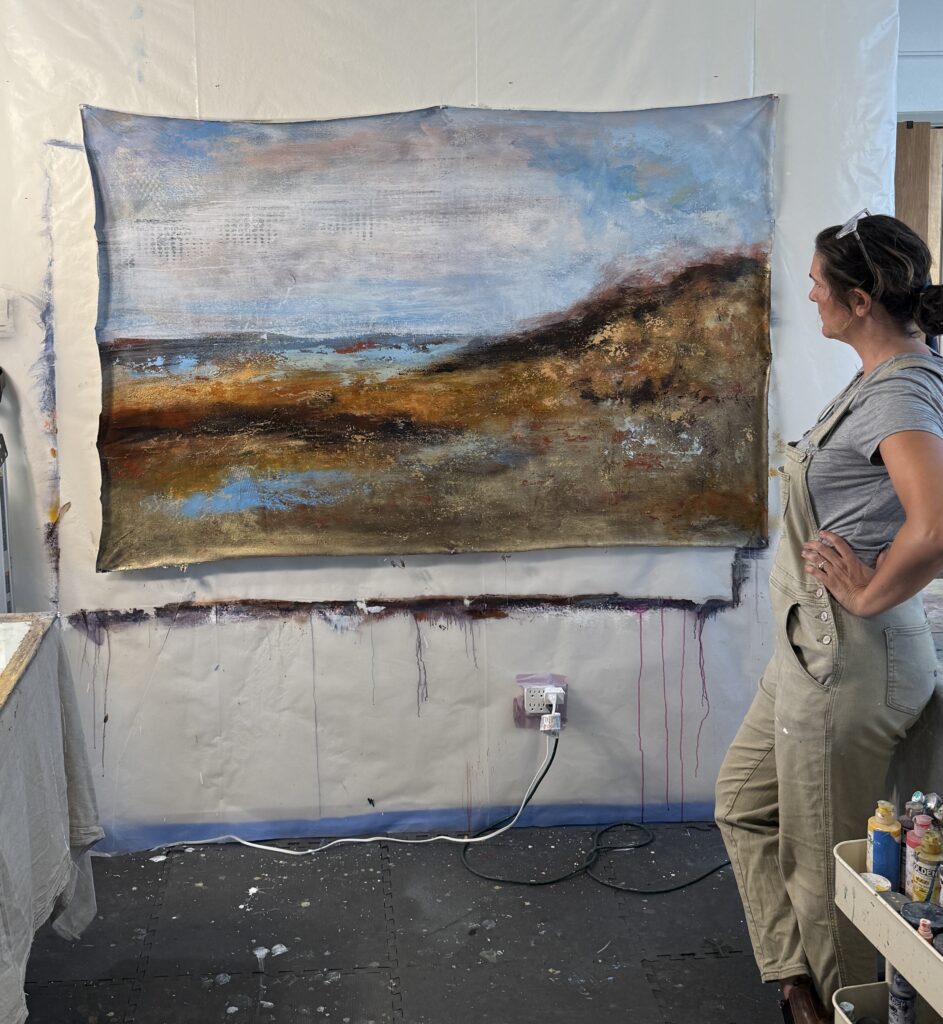
If you’ve been circling this same frustration — abandoning paintings in the messy middle, loving a piece but not knowing why it worked, feeling like everyone else got a manual you didn’t — I want you to hear this clearly: that’s not a talent problem. It’s a principles problem. And it’s entirely solvable.
I’m bringing this exact idea into my next Abstract Landscape Challenge — where we’ll take the guesswork out of one of the trickiest subjects in abstraction and build landscapes with real intention, not just happy accidents. Challenge begins August 21, 2026.
ABOUT ANDREA CERMANSKI
I am an artist out of Santa Fe, New Mexico who has been painting for almost 30 years. I love to teach first-timers as well as experienced painters who need a creative reboot. My work has been displayed in several galleries around the country, and I have a Bachelor’s in Art History, a Master’s in Art Education, and had my work in a show juried by Judy Chicago. The idea of getting more people painting makes me light up as I want to inspire more people to express their creative selves and tap into a place of joy and calm.
WANT TO LEARN MORE?
- Check out My Online Abstract Painting Course
- Read More Painting Tips Blog Posts
- Check out My Paintings & Art Prints for Sale
- Follow me on Youtube, Instagram, or Pinterest
Leave a Reply
Subscribe to get painting tips and news about my latest artwork & upcoming events.
Follow me@santafepaintingworkshops


