


Have you ever wished you could step away from everything for a week and just paint?
No emails to answer. No errands to run. No wondering what to make for dinner.
Just time to explore, experiment, and see what happens when you can really focus on your art.
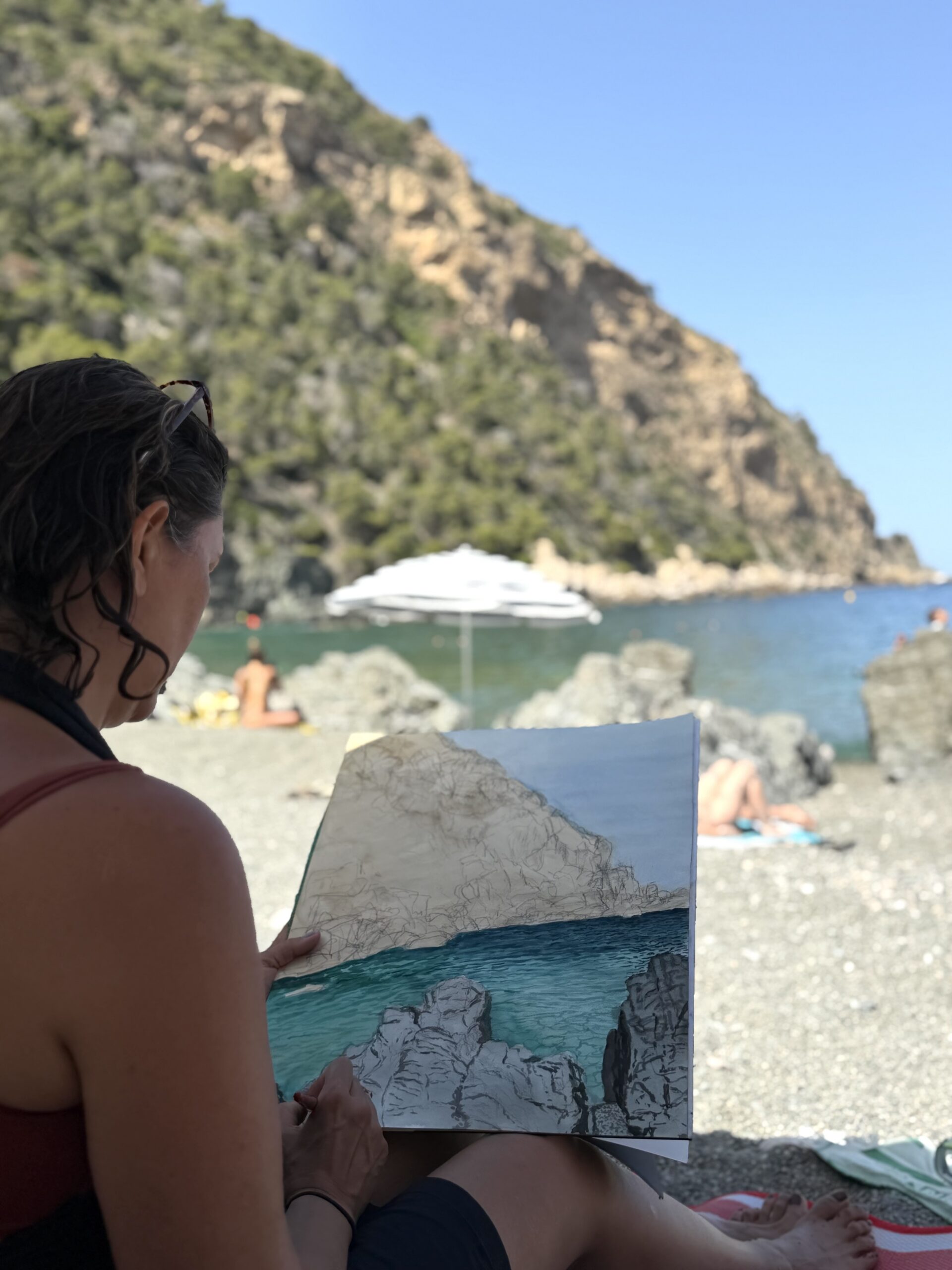
Last June, I spent a month in Spain, and one of my favorite experiences was sitting on the beach with my watercolors.
There was something so relaxing about painting outside, studying the shapes of the coastline, and watching the colors change with the light.
I wasn’t trying to create a masterpiece. I was simply observing what was in front of me.
And something interesting happened.
Those representational watercolor sketches became the starting point for abstract paintings back in my studio.
That experience reminded me how valuable it can be to step away from our usual surroundings and give ourselves the time and space to really look.
It’s also what inspired me to organize a painting retreat in Spain for June 2027.
What I learned painting on the Costa Brava
One of the things I love about traveling is how it makes you notice things you might otherwise overlook.
At home, we’re surrounded by familiar sights. We know what the trees look like, how the light falls in our studios, and what to expect from the landscape.
But when you travel somewhere new, everything catches your attention.
The colors are different. The architecture is different. Even the shapes of the rocks and the patterns in the landscape feel unfamiliar.
During my time on the Costa Brava in northeastern Spain, I was especially drawn to the coastline.
I loved the shapes of the rocks, the colors of the Mediterranean, and the way the land met the water.
I brought my watercolors to the beach and spent time studying what I saw.
And here’s what I found interesting.
Although I’m an abstract painter, I wasn’t trying to paint abstractly.
I was painting representationally, using watercolor to observe the landscape and understand how it was put together.
I looked at the large shapes, the relationships between colors, and the contrast between light and dark.
I thought about what was essential to the scene and what I could leave out.
These are exactly the kinds of decisions we need to make when creating abstract paintings.
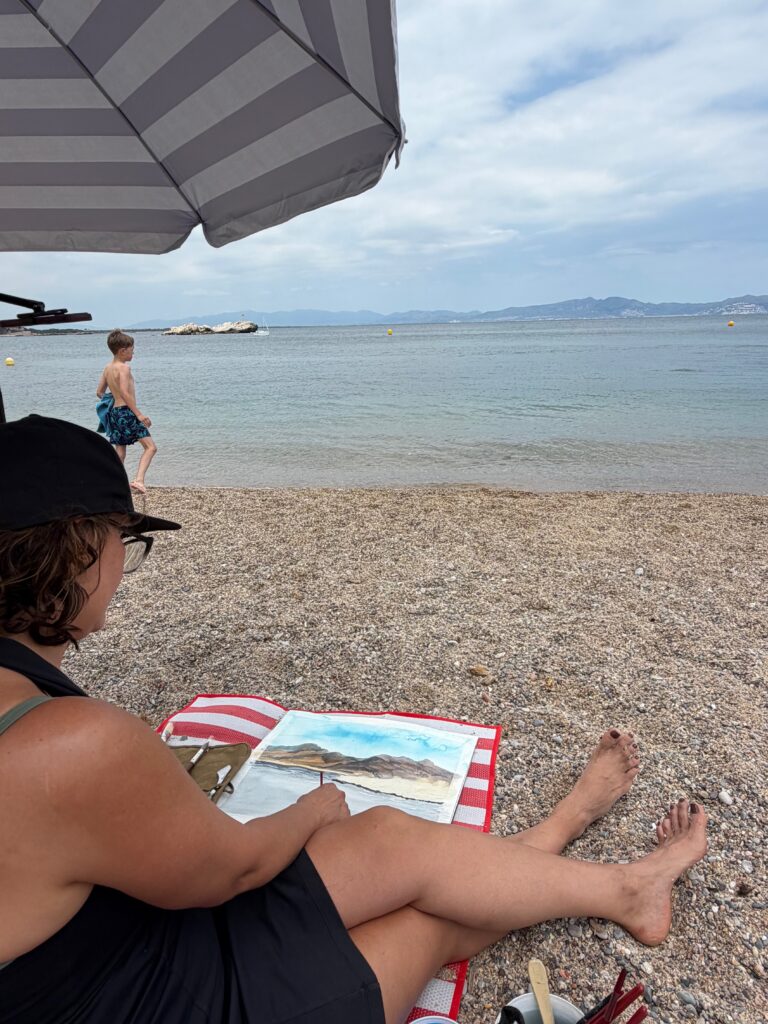
Painting on location during my month in Spain.
From Watercolor Sketches to Abstract Paintings
Here’s something I find interesting about abstraction.
Sometimes we think that painting abstractly means moving away from observation. But I’ve found that spending time really studying a subject can give me much more to work with when I begin an abstract painting.
When you’re painting representationally, you have something in front of you to study.
You can examine how shapes relate to one another. You can look at the balance of light and dark. You can notice interesting color relationships and patterns.
And when you move into abstraction, you can begin making choices about how to use those elements in a different way.
You might exaggerate a shape, simplify a complicated area, change a color, or rearrange elements to create a stronger composition.
The goal is no longer to reproduce what you see.
It’s to use what you’ve observed to create something personal and expressive.
This is the piece most people miss. Abstraction doesn’t mean abandoning what you see. It means learning how to use what you see in a different way.
And that’s where understanding the principles of composition, color, and design becomes so important.
If you’ve ever finished a painting you liked but thought, “I don’t know why it worked,” you know how frustrating it can be to rely on happy accidents.
Experimentation is an important part of painting. I love discovering something unexpected!
But when you understand why certain shapes, colors, and relationships work together, you can make more intentional decisions.
You have more options. And you don’t have to rely entirely on stumbling onto something successful.
The painting that came from my time in Spain
One of the abstract paintings inspired by my trip is Costa Brava, a 30″ × 22″ mixed-media painting on panel.
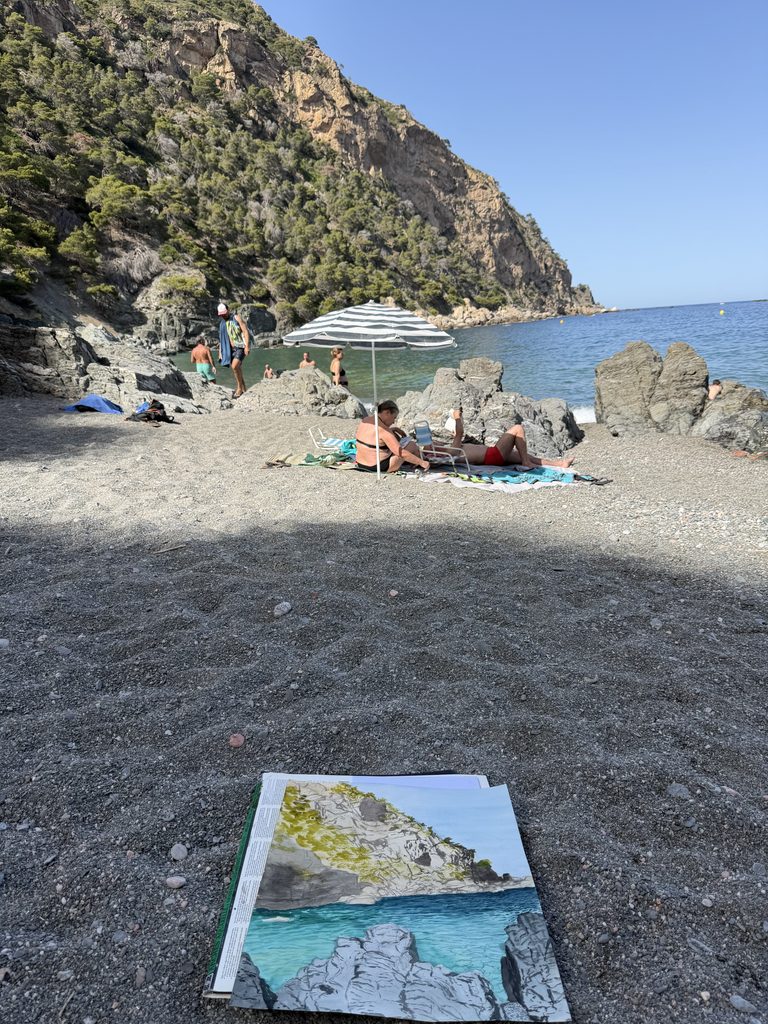
Watercolor studies made on location in Spain.
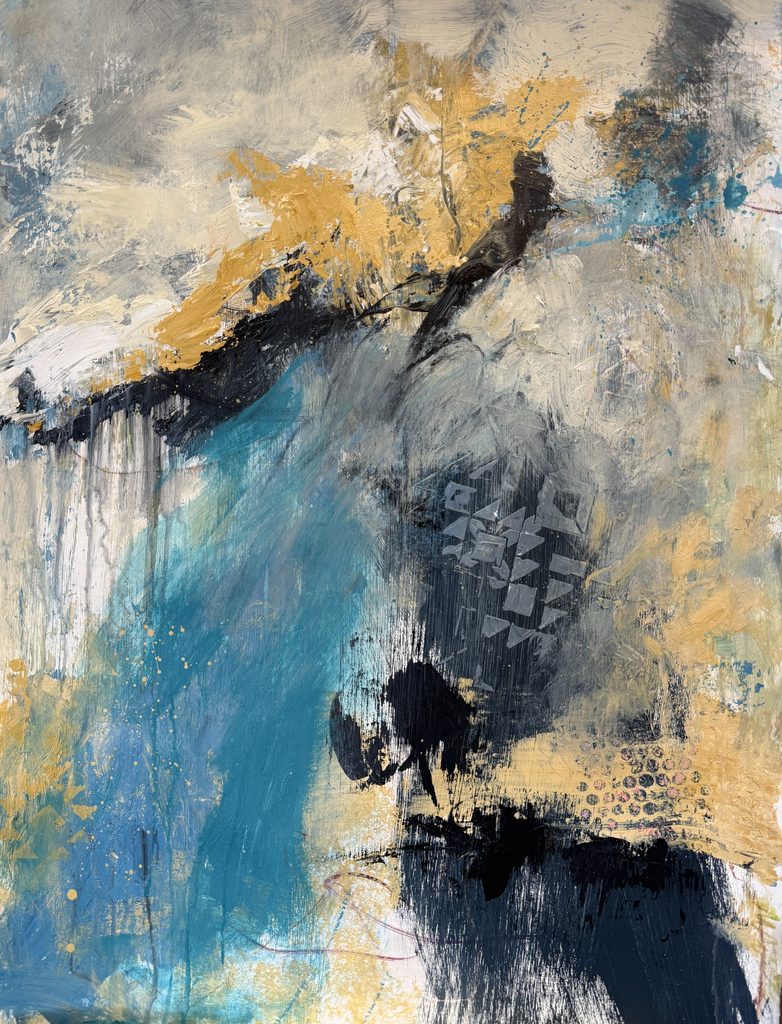
Costa Brava, 30″ × 22″, Mixed Media on Panel, by Andrea Cermanski.
What I love about this process is that the finished painting doesn’t need to look like the original landscape.
The watercolor studies helped me understand what interested me about the place.
Then, back in the studio, I could use those observations as a starting point for abstraction.
I wasn’t trying to copy the coastline. I was using the experience of being there, along with the shapes, colors, and visual relationships I’d studied, to create something new.
And that got me thinking about how much I wanted to share this approach with my students.
Why stepping away from everyday life can change your painting
Here’s the truth: You don’t need to travel to Spain to become a better painter.
You can learn and grow as an artist right in your own studio.
But there’s something special about giving yourself an extended period of time to focus on your art without all the usual interruptions.
Think about what often happens when you try to paint at home.
You finally have a few hours to work, but there’s an email you need to answer. Or an appointment to get to. Or something around the house that needs your attention.
Even when you make it into the studio, it can take time to settle into the work.
And just when you’re beginning to figure something out, it’s time to stop.
A painting retreat gives you something that’s often difficult to find at home: uninterrupted creative time.
You can try an idea, see what happens, and then keep exploring it.
Maybe your first attempt doesn’t work the way you hoped. That’s okay. You have time to figure out why and try something different.
You don’t have to make every painting successful.
In fact, some of the most valuable learning happens when a painting isn’t working and you begin to understand what needs to change.
That’s one of the reasons I love teaching in person.
I can look at your painting with you and offer specific feedback.
Not just, “That’s beautiful!”
We can talk about what’s working, what isn’t, where your eye is going, and what you might change to make the composition stronger.
My goal isn’t simply to help you finish a painting you like.
It’s to help you understand the decisions you’re making so you can take that knowledge back to your own studio.
Why I’m taking my students to southern Spain
My time painting on the Costa Brava was what first inspired me to bring my students to Spain.
For the retreat, I chose Almería in southern Spain because I wanted a coastal location with plenty of visual inspiration.
The dramatic coastline, beautiful colors and textures, and fascinating Moorish architecture offer so many possibilities for painting.
We’ll have opportunities to explore the landscape, make watercolor sketches on location, and then bring those observations back into the studio to develop our own abstract interpretations.
And we’ll have an entire week to do it, without the usual distractions of everyday life.
Our retreat is called From Observation to Abstraction: Capturing the Spirit of Place, and it takes place June 7–14, 2027, in Níjar, Almería, Spain.
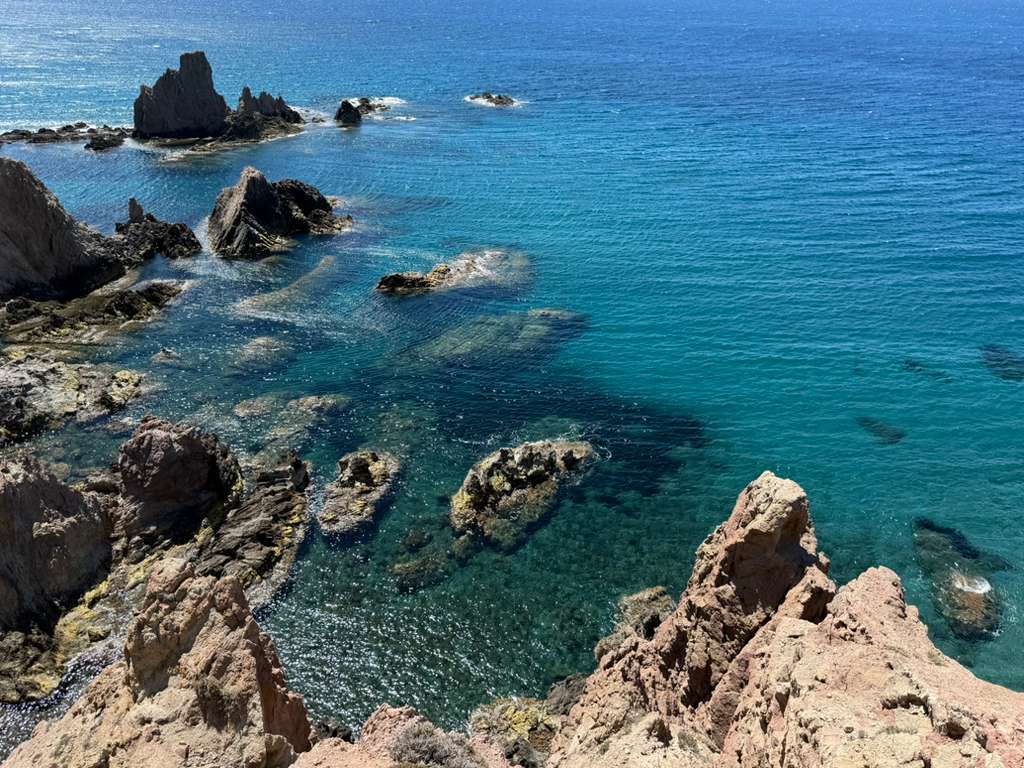
The dramatic coastline of Cabo de Gata-Níjar Natural Park in southern Spain.
What we’ll explore during our Spain painting retreat
During our week together, we’ll explore how to move from observation to abstraction.
We’ll begin with watercolor sketches, looking closely at the shapes, colors, patterns, and compositions we discover in the landscape.
Then we’ll use those observations as inspiration for abstract paintings, working with acrylics and mixed media.
We’ll experiment with expressive color, gestural marks, palette knives, scrapers, and interesting textures.
But we won’t just be collecting techniques.
We’ll explore why certain approaches work, how to create stronger compositions, and how to make decisions that support what you’re trying to express.
And whether you’re relatively new to abstraction or have been painting for years, I’ll meet you where you are.
If you’re newer to abstraction, I’ll guide you through the foundational principles step by step.
If you’re a more experienced painter, you’ll explore new techniques and approaches for moving from observation to abstraction, with plenty of one-on-one feedback from me throughout the retreat.
We’ll look at your actual paintings together, figure out what’s working (and what isn’t!), and talk through what to try next.
You don’t have to know exactly what you’re doing every step of the way.
That’s part of the learning process.
What matters is developing a better understanding of your choices so that, over time, you feel more confident making them.
A week of painting, exploring, and enjoying Spain
Of course, there’s another part of this retreat I’m looking forward to.
We’ll be staying at a beautiful private countryside estate in Níjar, with dedicated art studios, gardens, and a swimming pool.
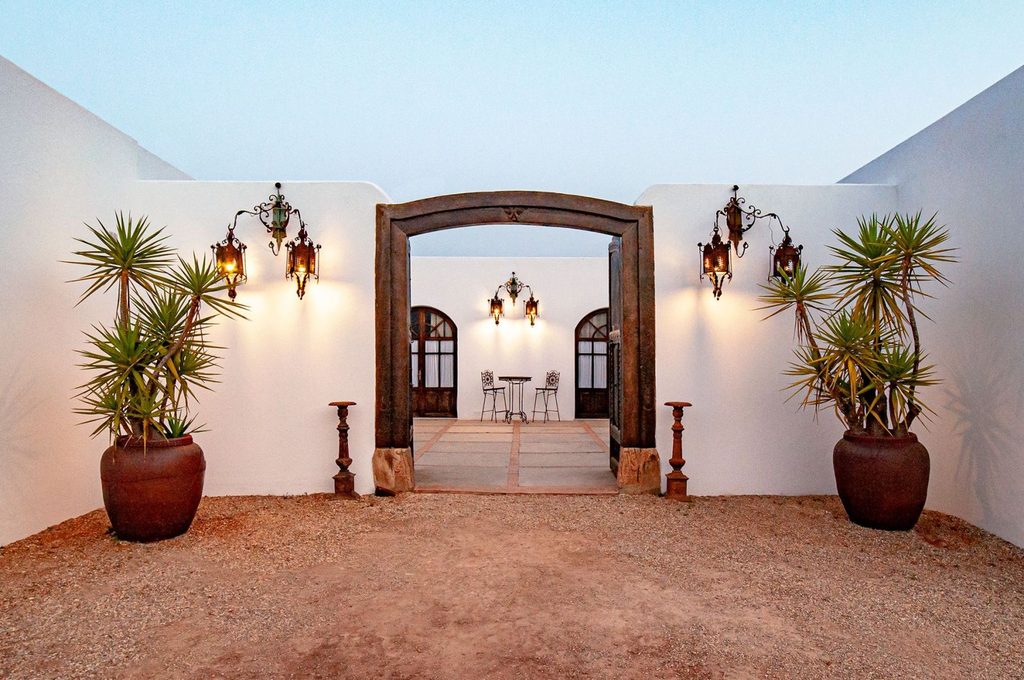
Our retreat home in Níjar, Almería.
Imagine spending the day painting and exploring, then sitting down to a delicious dinner prepared by a private chef.
No cooking. No grocery shopping. No figuring out where to eat.
Just time to enjoy the food, the setting, and the company of other artists.
We’ll also take two excursions to explore this part of Spain.
One will take us to historic Almería and its magnificent Alcazaba Fortress, where we’ll experience the region’s Moorish architecture.
The other will bring us to Cabo de Gata Natural Park and the coastal village of San José, with their beautiful Mediterranean scenery.
These excursions aren’t just sightseeing opportunities. They’re also chances to observe new shapes, colors, and textures that can become inspiration for our paintings.
The retreat includes seven nights of accommodations, painting instruction, meals prepared by a private chef, local wine, excursions, and scheduled transfers from Almería Airport.
Airfare and art materials are not included.
And because the practical details are taken care of, you’ll be able to spend your week focusing on painting, learning, exploring, and enjoying the experience.
What I hope you’ll bring home
Of course, I hope you’ll come home with some paintings you’re excited about.
But even more than that, I hope you’ll return with a better understanding of your own artistic process.
Maybe you’ll begin noticing shapes and patterns in places you hadn’t thought to look before.
Maybe you’ll feel more comfortable simplifying a subject instead of trying to include every detail.
Or maybe you’ll find yourself looking at a painting that isn’t quite working and, instead of wondering what to do next, you’ll have a few ideas about how to move forward.
That’s the kind of confidence I want to help artists develop.
Not the confidence that comes from knowing every answer.
The confidence that comes from understanding enough to explore, experiment, and make your own decisions.
My month painting in Spain reminded me how valuable it can be to slow down, observe, and give yourself the space to discover something new.
And I’m excited to share that experience with you.
Join me for a painting retreat in Spain, June 7–14, 2027
If you’ve been dreaming about a painting vacation in Spain, or simply wishing you had more uninterrupted time to focus on your art, I’d love for you to join me.
We’ll spend a week painting, exploring the landscapes and architecture of southern Spain, learning new approaches to abstraction, and enjoying some pretty wonderful food along the way.
You can find the full itinerary, accommodations, pricing, and booking details here:
Explore the Spain Painting Retreat
I hope you’ll join me in Spain!
Happy painting,
Andrea
Leave a Reply
Subscribe to get painting tips and news about my latest artwork & upcoming events.
Follow me@santafepaintingworkshops


