
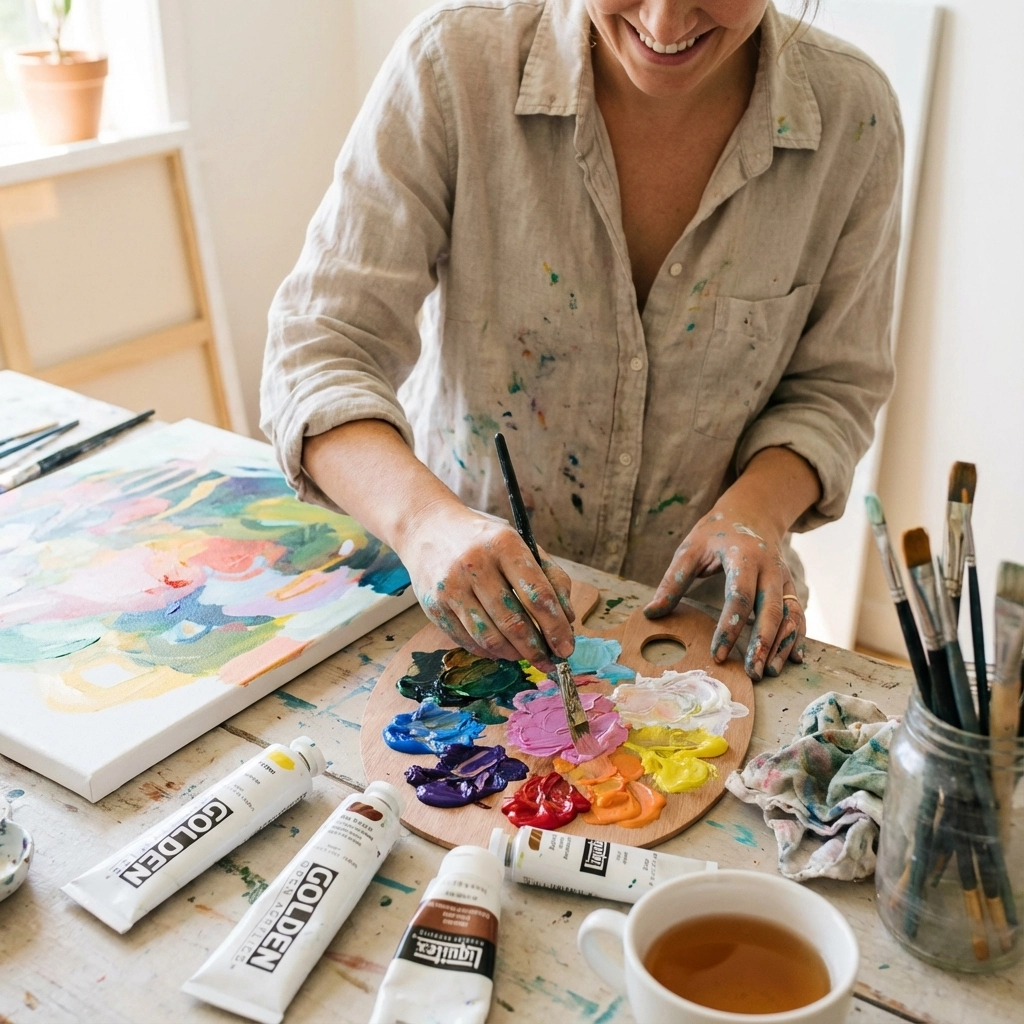

After teaching painting workshops in Santa Fe for over fifteen years, I’ve worked with just about every medium you can imagine. Oil paints, watercolors, gouache: I’ve used them all. But if I’m being completely honest, acrylic paint holds a special place in my heart, and I find myself reaching for it more often than any other medium.
There’s something magical about acrylic paint that just makes me light up when I’m teaching. Maybe it’s the way a complete beginner can dive in without fear, or how an experienced artist can push boundaries they never thought possible. Whatever it is, I want to share why this incredible medium has become my absolute favorite for both personal work and workshop instruction.
The Game-Changing Speed of Quick Drying
Let me start with what initially drew me to acrylics: that wonderfully fast drying time. When I’m working on a piece, I often gasp at how quickly I can build up layers and see my vision come to life. Unlike oils, which can take days or even weeks to dry completely, acrylics dry in minutes to hours depending on thickness and humidity.
This speed transforms your entire painting process. In my workshops, I watch students’ faces light up when they realize they can paint a base layer, grab a coffee, come back, and immediately start adding details without any worry about smudging or muddying colors. It’s like having a creative superpower!
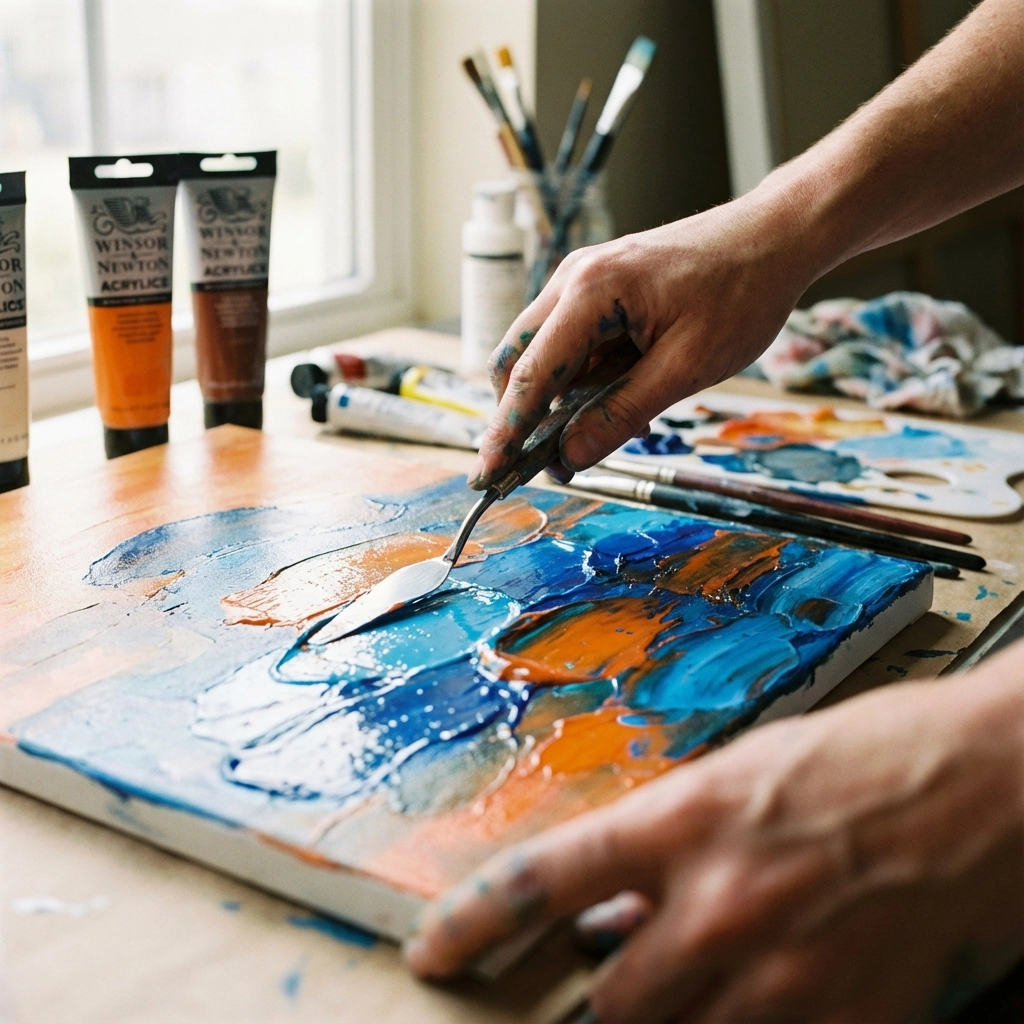
The rapid drying time also means you can build complexity quickly. I’ll often demonstrate glazing techniques where we layer transparent colors to create depth and luminosity. With oils, this process could take weeks between layers. With acrylics, we can create stunning glazed effects in a single afternoon session. Your painting develops right before your eyes, which keeps that creative momentum flowing.
If you make a mistake or want to change direction, you’re not stuck waiting. Paint over it, adjust the composition, try a completely different color scheme: the quick drying gives you the freedom to experiment without consequence.
Incredible Versatility Through Mediums
Here’s where acrylics really blow my mind: their chameleon-like ability to transform into completely different mediums. I’ve developed techniques using various acrylic painting supplies and mediums that allow me to create effects ranging from delicate watercolor washes to rich, buttery oil-like textures, all within the same painting.
Want watercolor effects? I simply thin my acrylics with water or use a flow aid medium. The paint becomes transparent and luminous, flowing beautifully for soft, dreamy backgrounds. In my landscape workshops, we start with these diluted washes to establish the sky and distant mountains.
Craving that thick, sculptural impasto look? Add some heavy gel medium or molding paste, and suddenly you’re building paint so thick you can create actual texture and dimension. I love showing students how to use a palette knife to create chunky, expressive marks that catch the light dramatically. It’s like sculpting with paint!
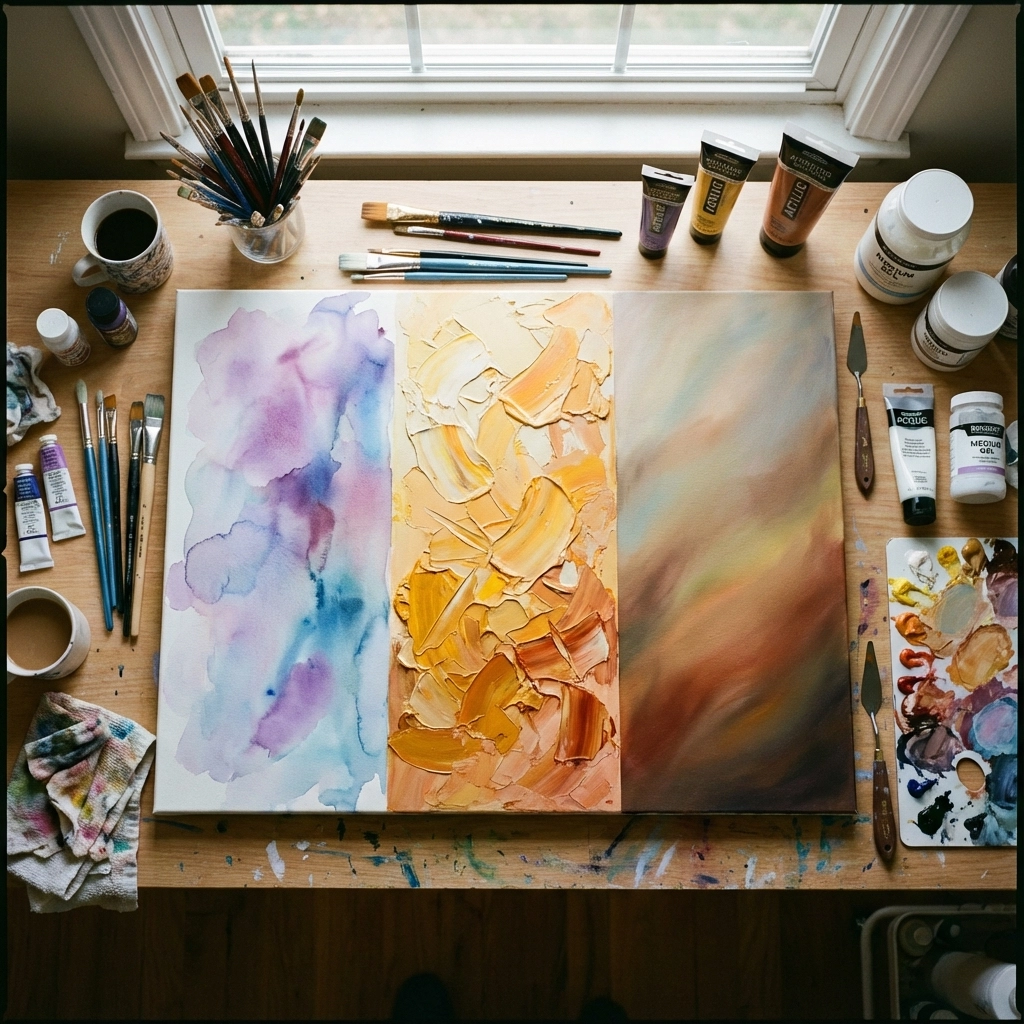
For those oil painting effects: that smooth blendability and extended working time: I reach for slow-drying mediums. These extend the open time of acrylics, allowing for that buttery, gradual blending that oil painters love. You get the best of both worlds: oil-like workability with acrylic’s quick cleanup and safety.
The variety of mediums available for acrylics is staggering. Texture gels, interference colors, iridescent mediums, crackle paste: each one opens up new creative possibilities. I keep a whole arsenal of these in my studio, and students are always amazed at the effects we can achieve. If you want to learn how to use mediums, be sure to check out my mini-course, Paint Like a Pro. You will watch me create stunning textures and effects used in my gallery pieces. Plus, the course includes my PDF guide with detailed instructions for 5 essential mediums that will elevate your paintings.
Superior Archival Quality That Lasts
One of the most compelling reasons I recommend acrylics, especially to serious artists, is their exceptional archival quality. Unlike oils, which can yellow, crack, or become brittle over time, high-quality acrylic paints maintain their color integrity for decades.
I’ve seen oil paintings from the 1980s that have noticeably yellowed or darkened, completely changing the artist’s original vision. It breaks my heart! With artist quality acrylic paint, what you see today is what you’ll see in fifty years. The colors stay true, vibrant, and fresh-looking.
This permanence gives me such confidence when I’m creating. I know that the sunset orange I’m mixing today will still glow with the same intensity years from now. For students who are investing time and emotion into their artwork, this stability is incredibly valuable.
The flexibility of dried acrylic paint also means fewer cracks and less damage over time. Unlike oil paint, which continues to cure and can become rigid and brittle, acrylic paint retains some flexibility even after fully drying. Your paintings can withstand temperature changes and minor movements without developing unsightly cracks.
Practical Advantages That Make Life Easier
Let’s talk about the everyday benefits that make acrylics such a joy to work with. First, cleanup is a breeze: just soap and water! No harsh solvents, no toxic fumes, no special disposal procedures. I can paint in my living room if I want to, without worrying about ventilation or disturbing others with chemical odors.
This safety aspect is huge in my workshops. Students can feel confident working in my studio, knowing they’re not being exposed to harmful substances. Studios stay fresh and pleasant, and everyone can focus on creating rather than worrying about health concerns.
Acrylics also work on virtually any surface. Canvas, wood, paper, metal, fabric, glass: if you can imagine painting on it, acrylics will probably stick to it beautifully. This versatility opens up so many creative possibilities for mixed-media work and unconventional projects.
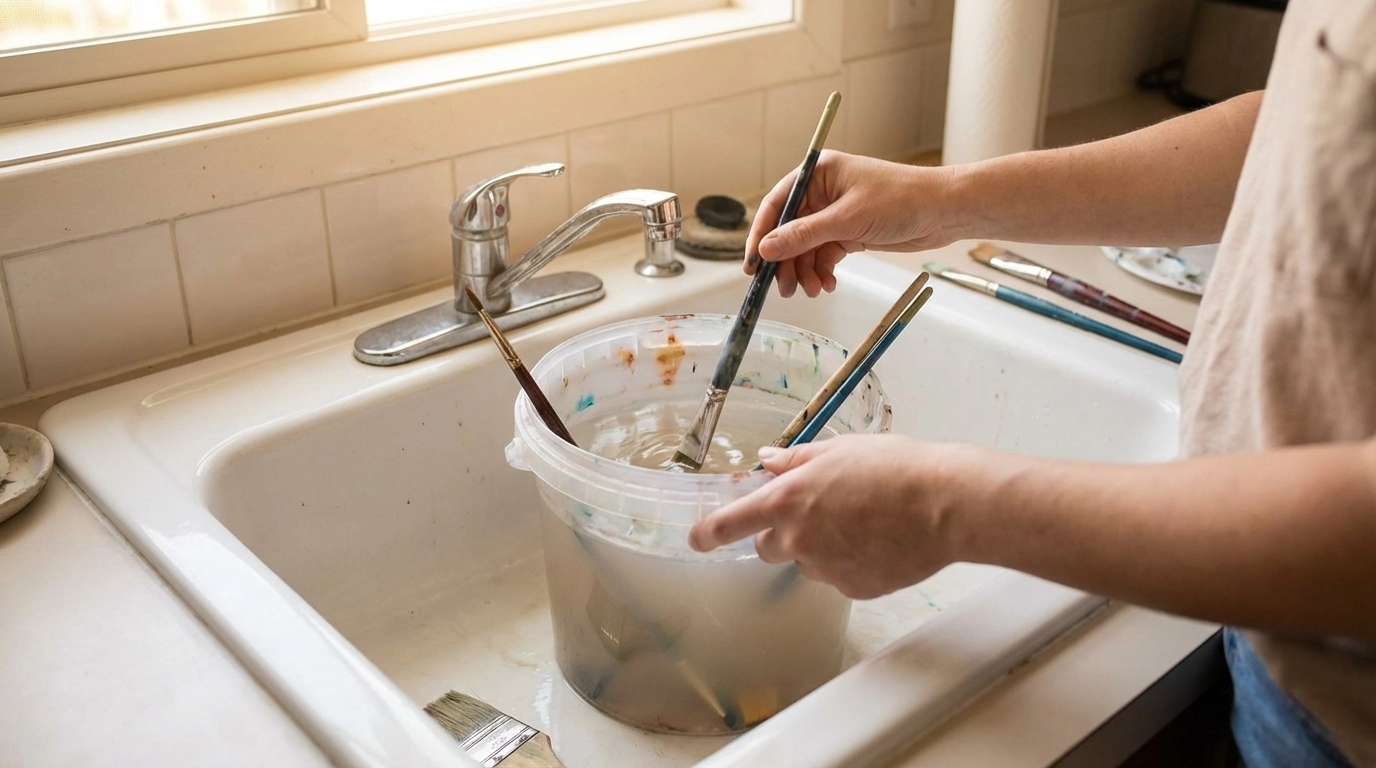
Eco-Friendly Acrylic Clean-Up: My Bucket Method
After fifteen years of teaching in the studio, I’ve learned that sending acrylic paint water down the sink is a fast track to clogged pipes. Acrylic is a plastic polymer; those tiny particles settle and stick inside plumbing like a gentle glue. Here’s the pipe-safe, eco-conscious routine I recommend and use every day:
- Pour into a bucket
- After painting, pour your dirty brush water into a designated waste bucket. Rinse your brushes in a second bucket of clean water, then pour that rinse water into the waste bucket as well.
- Let it settle
- Leave the bucket undisturbed for about 24 hours. The acrylic solids will settle to the bottom and the water on top will turn mostly clear.
- Pour off the clear water outdoors
- Carefully pour the clear water onto gravel or use it to water a tree or sturdy shrubs in your yard. Avoid storm drains and waterways.
- Wipe out the sludge
- Use a paper towel to wipe out the acrylic sludge left in the bottom of the bucket and throw the towel in the trash. Don’t rinse the sludge down the sink.
Pro tips I recommend:
- Keep two containers while painting: a “first rinse” and a “clean rinse” to stretch your water further.
- Wipe off excess paint into a paper towel before rinsing in your water container.
- Never clean brushes or dump dirty paint water directly into your sink.
You’re protecting your pipes, your studio sink, and the environment. Try this today and celebrate a cleaner, greener studio practice!
Choosing Quality Supplies That Make a Difference
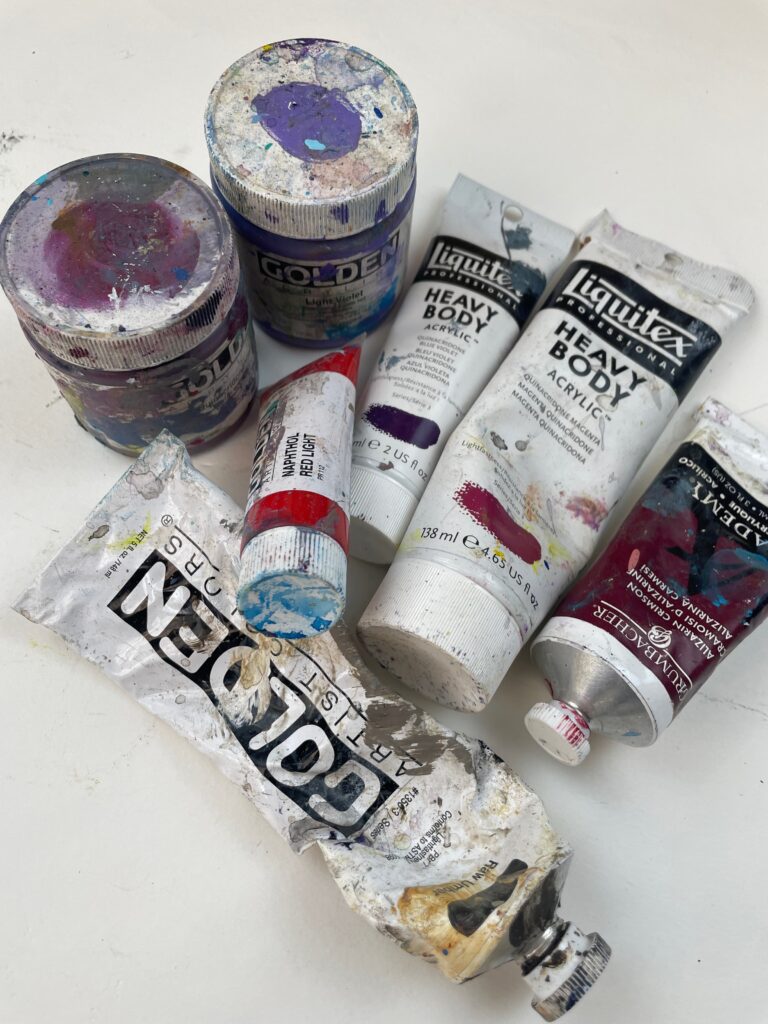
Not all acrylics are created equal, and I always encourage students to invest in quality materials when possible. Best brands for acrylic paint that I consistently recommend include Golden, Liquitex, Grumbacher and Winsor & Newton. These companies produce artist quality acrylic paint with high pigment loads, excellent color stability, and smooth consistency.
The difference between student-grade and artist-grade acrylics is dramatic. Artist-grade paints have more pigment, better binders, and superior color mixing capabilities. They’re worth the investment if you’re serious about your work.
For brushes, synthetic bristles work beautifully with acrylics. I recommend looking for best acrylic paint brushes for professionals from brands like Princeton, Da Vinci, or Escoda. A good best acrylic paint brush set should include flat brushes for broad coverage, round brushes for detail work, and perhaps a fan brush for textures.
Getting Started: My Encouragement to You
If you’ve been hesitant about trying acrylics, or if you’ve been using them but haven’t explored their full potential, I encourage you to dive deeper. Start with a basic set of colors: burnt umber, ultramarine blue, cadmium red, cadmium yellow, titanium white, and perhaps a violet. Add a few basic mediums: a flow aid, a gloss medium, and maybe a texture gel.
Don’t be afraid to experiment! One of the most beautiful aspects of acrylic painting is how forgiving and adaptable it is. Make mistakes, try weird combinations, push the boundaries of what you think the paint can do. In my experience, the most breakthrough moments happen when students stop trying to control everything and start playing.
The speed, versatility, and reliability of acrylics create the perfect environment for artistic growth. Whether you’re drawn to realistic landscapes, bold abstracts, or mixed-media exploration, acrylics can support your vision and help you develop as an artist.
Remember, every master painter started with their first brushstroke. Acrylics make that journey more accessible, more forgiving, and more immediately rewarding than almost any other medium. So grab your brushes, squeeze out some paint, and let yourself discover the incredible possibilities that await. You might just fall in love with acrylics the way I did: and find that love growing deeper with every painting you create.
Want to Put These Acrylics to Work?
If you’re inspired to pick up a brush (or already painting and want to try something new), join me for my Abstract Landscape Challenge starting January 12, 2026.
In just 4 days, I’ll walk you step-by-step through painting an expressive abstract landscape—even if you’ve never painted before. We’ll use the very techniques I love most about acrylics: fast layering, gorgeous drips, bold mark-making, and even a watercolor effect using Golden’s Wetting Agent.
Here’s what you get:
- One live class + 4 pre-recorded lessons
- A final live class where you learn the theory behind the practice (so you can paint confidently on your own)
- A simple method for painting from imagination, not reference photos
- Access to our private Facebook community for support and feedback
The investment? Just $10.
This is your permission slip to play, experiment, and create something you’ll be proud to hang on your wall.
[Join the Abstract Landscape Challenge →]https://santafepaintingworkshops.com/alc-1-26-og
See you on January 12—let’s make something beautiful together. 🎨
ABOUT ANDREA CERMANSKI
I am an artist out of Santa Fe, New Mexico who has been painting for almost 30 years. I love to teach first-timers as well as experienced painters who need a creative reboot. My work has been displayed in several galleries around the country, and I have a Bachelor’s in Art History, a Master’s in Art Education, and had my work in a show juried by Judy Chicago. The idea of getting more people painting makes me light up as I want to inspire more people to express their creative selves and tap into a place of joy and calm.
WANT TO LEARN MORE?
- Subscribe and get one of the FREEBIES below!
- Ebook on How to Move From Representational Painting to Abstraction: 5 Transformative Art Lessons
- PDF explaining How to Use My 5 Favorite Mediums
- Break Free and Breathe: Type-A Guide to Artistic Play. Powerful exercises to loosen you up to create better abstracts.
- Check out My Online Abstract Painting Course
- Read More Painting Tips Blog Posts
- Check out My Paintings & Art Prints for Sale
- Follow Me On YouTube, Instagram, or Pinterest