
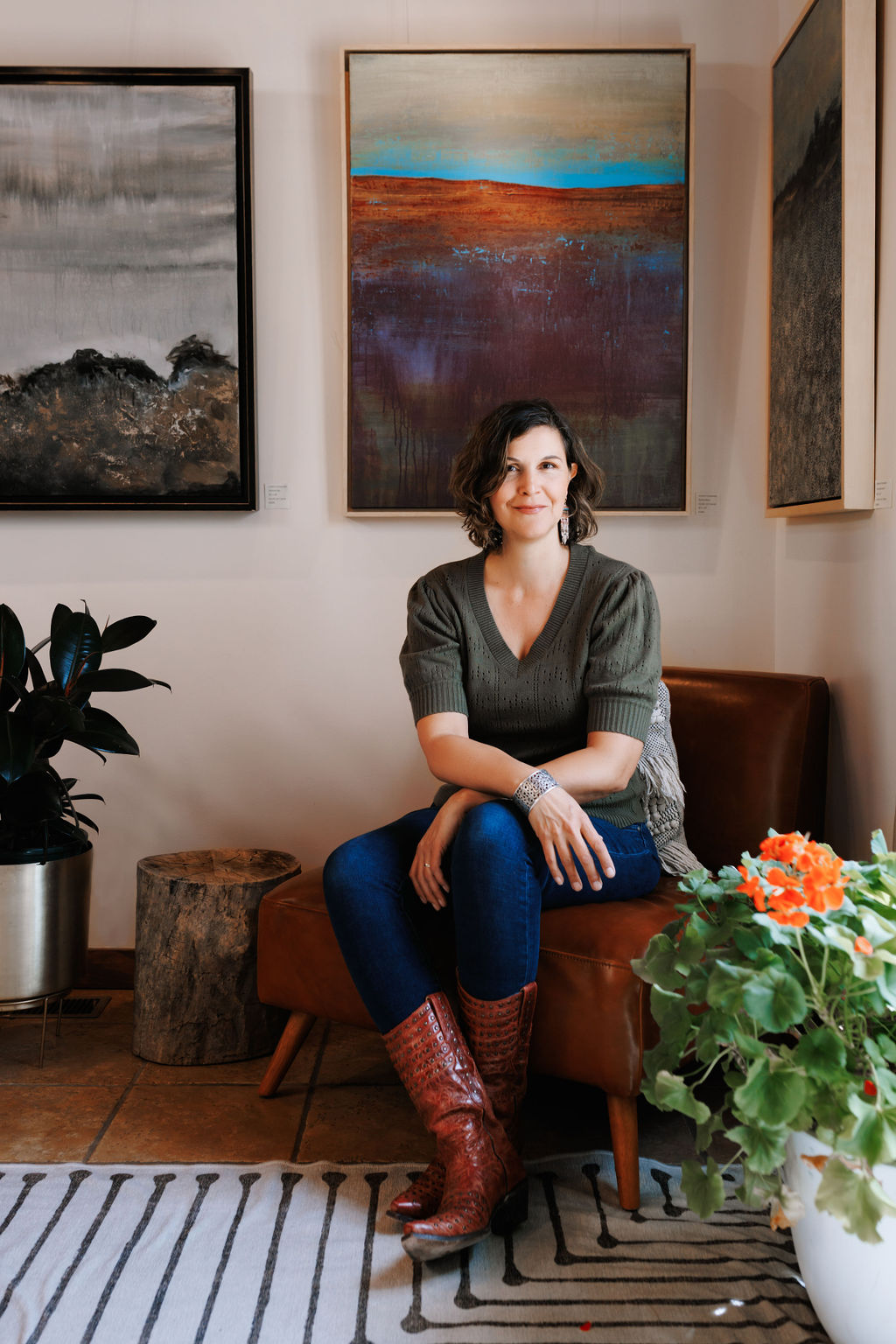
Defining your style can feel like this big, intimidating project. Like you need a checklist, a step-by-step guide, or a teacher to declare: Congratulations, you have officially developed your style!
But the truth is, style is less about achieving something and more about allowing something. Your style is already inside you — intuition is simply how you access it.
Intuition shows up in the little choices:
- Choosing colors based on what excites you, not just what’s “realistic.”
- Deciding whether your brushstrokes are bold and messy or soft and precise.
- Recognizing the moment your painting feels finished (even if you can’t explain why).
When you follow those instincts, you’re building a body of work that feels authentic. And that authenticity is what people recognize as your style.
The Battle Between Intuition and Perfectionism
Let’s be honest — following intuition can feel terrifying, especially if you’re a perfectionist.
Perfectionism whispers:
- But it doesn’t look like the photo.
- That color isn’t accurate.
- What if people think it looks messy?
Intuition whispers:
- This color lights me up.
- That brushstroke feels daring, but right.
- It’s finished because I feel satisfied, not because it matches a standard.
See the difference? Perfectionism is about control and external approval. Intuition is about freedom and self-trust.
If you struggle with letting go of “shoulds,” you’re not alone. Many artists wrestle with the urge to perfect every detail. But remember: art isn’t about recreating the world exactly as it is — it’s about expressing the world as you experience it.
Pushing past what it “should” look like is where the magic happens. And often, that’s where style emerges.
Intuition in Realism
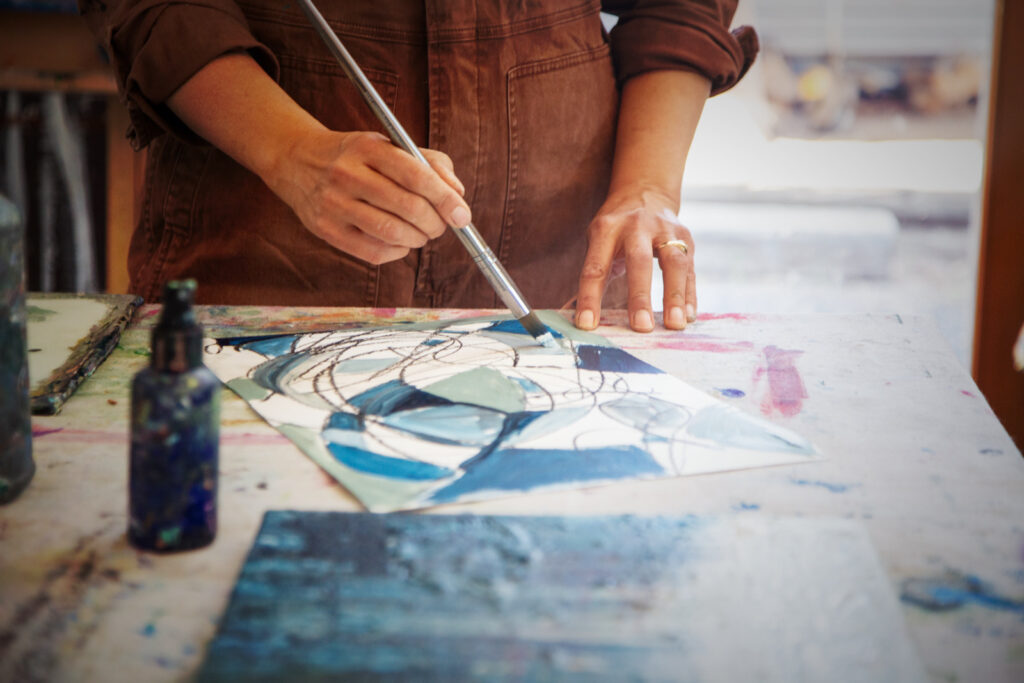
You might think realism leaves no room for intuition — after all, isn’t the goal to paint things exactly as they are? Not quite. Even in realism, your inner compass is at play.
- You might choose to leave something out that feels distracting.
- You might shift the colors to match your emotional response instead of the literal palette in front of you.
- You might soften details in one area to bring more attention to another.
All of these choices are intuitive — they’re about creating an artwork that resonates with you, not just copying what you see.
Intuition in Abstraction
If realism leaves some wiggle room for intuition, abstraction throws the doors wide open and says, “Go for it!”
Here, intuition often shows up as those bold moves that scare you a little:
- Making a sweeping brushstroke that threatens to ruin your careful layers (but ends up being the best part).
- Adding a color that doesn’t “fit” but somehow makes the whole painting come alive.
- Choosing to stop, even if your logical brain says, “Just one more layer.”
Abstraction thrives on risk — and risk is fueled by intuition. As artist Helen Frankenthaler once said:
“There are no rules. That is how art is born, how breakthroughs happen. Go against the rules or ignore the rules. That is what invention is about.”
Risk and intuition go hand in hand. When you listen to your gut and take the leap, you create work that surprises not only your viewers, but yourself.
Examples of Intuitive Choices in the Studio
Let’s break down some everyday ways intuition guides style (with a touch of humor, because sometimes your intuition is basically the mischievous friend daring you to just do it already):
- Colors
You’re standing in front of your palette and your eye keeps drifting to that electric pink. Logic says, This is a landscape, pink trees don’t exist. Intuition says, But wouldn’t it be fun? Guess which one leads to a painting that feels like you? - Brushstrokes
Maybe you crave big, bold marks — but your inner critic says, Careful, that might look messy. Or maybe you naturally gravitate toward tiny, detailed strokes, but worry it isn’t “expressive” enough. Your style is hiding in those preferences. - Knowing When to Stop
This one’s tough. Sometimes your brain screams, More detail! More layers! Keep going until it looks impressive! But your gut knows when a painting feels complete. Trusting that feeling can save you from overworking your art (and your nerves). - Composition
You might feel drawn to crop in closer than expected, or to leave an area of the canvas bare. These choices might not make sense logically, but they make sense emotionally — and that’s where style grows.
Why It’s Hard to Trust Intuition
If following intuition is so important, why is it so hard? A few reasons:
- Fear of failure: Taking risks feels scary because, yes, sometimes they flop. But failure is part of the process — and it often leads to breakthroughs.
- Comparison: Looking at other artists’ work can drown out your inner voice. Remember: their style is theirs. Yours is waiting for you.
- External validation: It’s tempting to create what you think will sell, please your teacher, or get likes on Instagram. But bending to outside pressure distances you from your authentic style.
Overcoming these hurdles isn’t about eliminating doubt — it’s about acting despite it. Each time you follow your intuition, you strengthen your creative self-trust.
Intuition and Confidence
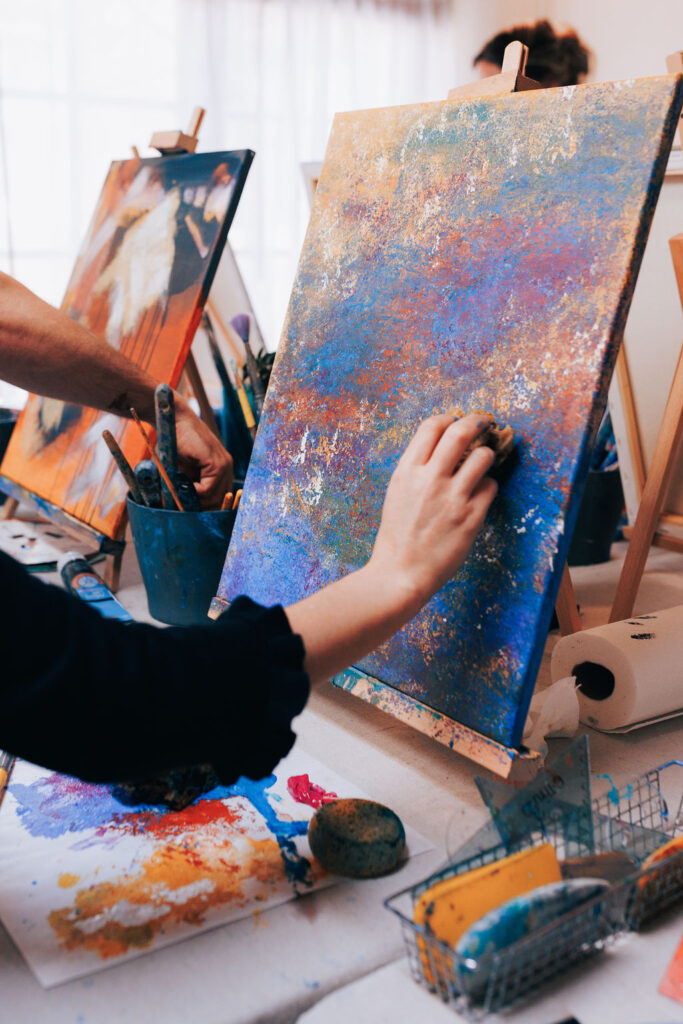
The real magic happens when you start noticing the connection between intuition and confidence.
Every time you follow that inner nudge — whether it’s to stop early, try a daring color, or make a bold mark — and it works, your confidence grows. And even when it doesn’t “work,” you learn something valuable about your process.
Confidence doesn’t come from painting flawless pieces. It comes from trusting yourself enough to make choices, take risks, and keep going.
A Final Word of Encouragement
Following your intuition doesn’t mean every painting will turn out perfectly. (Spoiler: they won’t.) But each time you honor that gut feeling, you carve out your artistic identity a little more. You build a style that is undeniably yours.
So the next time you’re in the studio and you feel that tug — to grab the neon color, to leave something unfinished, to make the bold brushstroke — listen. Even if your perfectionist brain protests. Even if it feels scary.
Because intuition isn’t just about finishing a painting. It’s about defining your voice. It’s about creating work that looks like you. And that’s the kind of art that not only builds confidence in the studio, but also resonates with the people who see it.
Ready to Take the Next Step?
If reading this has you nodding along, thinking “Yes, I want to trust my intuition more… but I’m not sure how to actually do it in practice,” you’re not alone. Following your gut sounds simple, but putting it into action takes courage, guidance, and a little community support.
That’s exactly why I created the Awaken Your Artistic Voice: Define Your Style Challenge.
It’s designed to help you quiet the perfectionism, lean into your intuition, and start creating work that feels authentically you. Over the course of the challenge, you’ll explore playful exercises that push you past the “shoulds” and into the joy of painting with confidence and freedom.
👉 [Sign up for the Awaken Your Artistic Voice: Define Your Style Challenge here!]
ABOUT ANDREA CERMANSKI
I am an artist out of Santa Fe, New Mexico who has been painting for almost 30 years. I love to teach first-timers as well as experienced painters who need a creative reboot. My work has been displayed in several galleries around the country, and I have a Bachelor’s in Art History, a Master’s in Art Education, and had my work in a show juried by Judy Chicago. The idea of getting more people painting makes me light up as I want to inspire more people to express their creative selves and tap into a place of joy and calm.
WANT TO LEARN MORE?
- Subscribe and get one of the FREEBIES below!
- PDF explaining How to Use My 5 Favorite Mediums
- Ebook on How to Move From Representational Painting to Abstraction: 5 Transformative Art Lessons
- Check out My Online Abstract Painting Course
- Read More Painting Tips Blog Posts
- Check out My Paintings & Art Prints for Sale
- Follow me on Youtube, Instagram, or Pinterest
Leave a Reply
Subscribe to get painting tips and news about my latest artwork & upcoming events.
Follow me@santafepaintingworkshops


