
If you’ve been painting for a while, you probably know this feeling:
You’ve mastered the basics. You’re no longer a beginner fumbling with brushes or color mixing. In fact, some of your paintings really shine. But when you look at your recent work side by side, something feels… off.
Instead of seeing a unified collection, you see pieces that look like they could have been painted by five different artists. One has loose brushwork, another is tightly detailed. One is moody and muted, the next is bright and playful.
You ask yourself: Which one is the real me? Do I even have a style? How do I even figure out my art style?
If you are wondering how to find your art style, you’re not alone. In fact, this is the most common struggle I see for intermediate artists. And the good news? Struggling with style is not a sign of failure — it’s actually proof that you’re ready for your next breakthrough.
Common Reasons Artists Struggle to Develop Their Style
Let’s break down why so many artists hit this wall.
1. Too Many Techniques, Not Enough Clarity
At the beginning, you’re focused on learning the craft: how to blend colors, how to use composition, how to control your brush. Each new technique feels exciting and full of possibility.
But as your skills grow, so does your toolkit. Suddenly you’re experimenting with glazing one day, palette knife the next, watercolor washes another. Each technique offers a different look — and without clarity, your portfolio becomes a patchwork of styles rather than a cohesive voice. You may be trying to figure out your art style by trying a lot of techniques, and that’s ok.
2. Influence Overload
It’s natural (and important!) to be inspired by other artists. We all start by copying, borrowing, or imitating. But at some point, influences start to clash.
Maybe you admire the bold shapes of Matisse, the subtle color harmonies of Monet, and the raw brushstrokes of Van Gogh. You try them all, but your paintings start to feel like a mash-up of other people’s ideas instead of your own.
This doesn’t mean you’re doing something wrong — it means you’re still in the stage of sorting through inspiration. The challenge is learning how to filter what you take in so that it amplifies, rather than drowns out, your own instincts. In fact, this is an important part of how to find your style!
3. One-Off Creations
Beginners often create one-off pieces because they’re practicing skills. But for intermediate artists, this habit can become a trap.
You might finish a painting you love — and then jump into something completely different. Over time, you end up with a stack of works that don’t talk to each other. When you put them together, they feel scattered.
Collectors, galleries, and even casual viewers notice this. Instead of saying, “I can recognize your work across the room,” they say, “I never know what to expect from you.”
Why This Struggle Is Actually Good News for Finding Your Style
Here’s the reframe I want you to hold onto: if you feel scattered, it means you’re close to clarity. And that means, you are at the edge of figuring out your art style!
Think of it like this: when a river rushes in too many directions, it eventually carves out a clear channel. That’s where the power is.
When you feel pulled between techniques, influences, and directions, it’s a sign that your creative instincts are searching for a way forward. You’re standing on the edge of discovering your authentic artistic voice.
That’s exciting. And it’s exactly where transformation begins.
Practical Steps for How to Find Your Art Style
The biggest myth about style is that you have to “invent” it. In reality, your style is already present in your work — it’s hiding in the patterns you naturally return to, the choices you make without thinking.
The process isn’t about forcing yourself into a box. It’s about noticing the threads that already run through your art and learning how to amplify them.
One of the clearest ways to learn how to find your art style is to look for patterns that show up again and again in your work. Here are a few practical steps to start:
Step 1: Identify the “Most You” Painting
Go through your body of work and choose the painting that feels the most authentic. Not necessarily the most technically impressive, but the one that feels yours.
Ask yourself: What about this painting feels right? Is it the color palette? The subject matter? The looseness or precision of the marks?
That painting holds powerful clues.
Step 2: Look for Recurring Choices
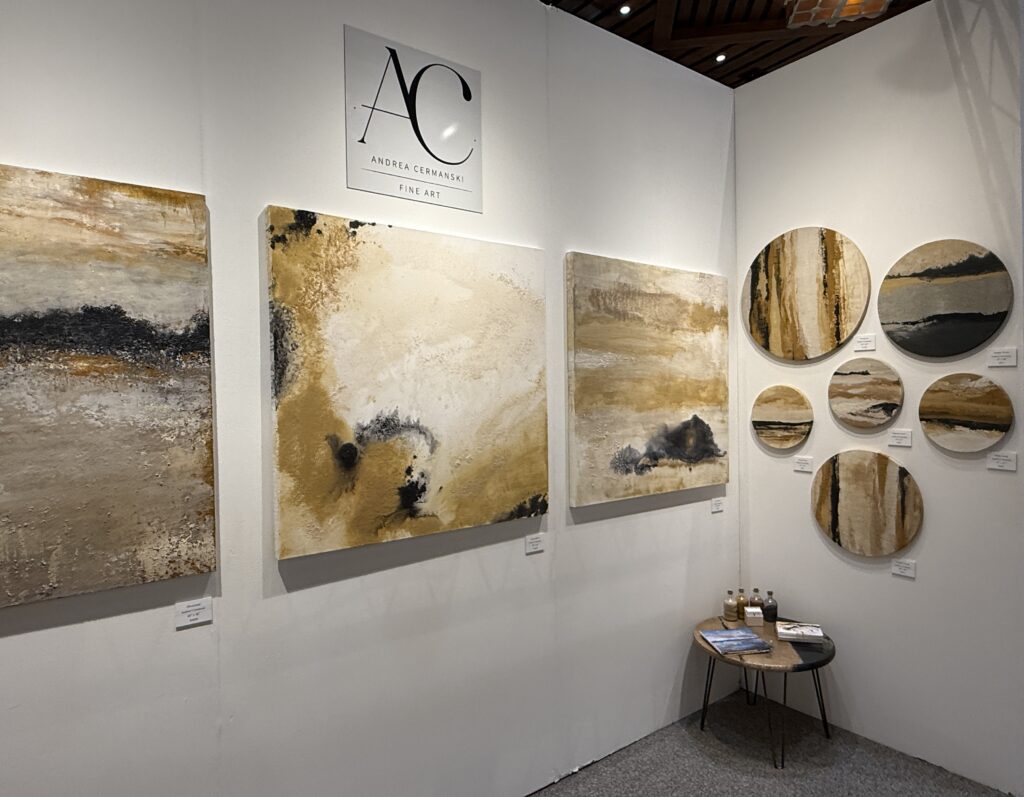
Now, spread out 10–15 of your recent works. Step back and look for patterns. Do you keep returning to certain colors? Certain shapes? Certain moods?
You may not notice these on a piece-by-piece basis, but side by side, you’ll start to see threads. These are your artistic fingerprints.
Step 3: Ask Others What They See
Sometimes we’re too close to our own work to notice its consistencies. Share your paintings with a trusted peer, mentor, or even your audience. Ask: If you had to describe what makes these mine, what would you say?
You might be surprised by the answers. People often notice connections you’ve been blind to.
Step 4: Filter Inspiration, Don’t Collect It All
Start paying attention to the kind of inspiration that strengthens your voice — versus the kind that confuses it. For example, if you’re drawn to loose expressive marks, looking at hyperrealistic painters might not be helpful right now.
Instead of gathering everything, begin filtering. Ask: Does this influence align with the direction I want to grow?
Step 5: Experiment Within Limits
One of the fastest ways to discover your voice is to set boundaries. Choose a subject, a color palette, or a format — and stick with it for 5–10 paintings.
At first, it may feel limiting. But over time, you’ll notice that within those boundaries, your individuality shines more clearly.
Why Finding Your Artistic Style Matters
Some artists resist the idea of defining their style because they fear it will trap them. They think: If I commit to a style, I’ll lose my freedom.
But the opposite is true. Style isn’t a prison — it’s a home base. It gives you a foundation from which to explore.
Think about musicians: you recognize a song as belonging to a certain artist within seconds, even though each album may evolve. That’s what you want in your art: enough consistency that people can identify it as yours, even as you grow and shift over time.
The Bottom Line
If you’re struggling with style right now, you’re not broken. You’re not failing. You’re in the exact place you need to be for your artistic voice to emerge.
The frustration you feel? It’s the pressure that carves the river channel. It’s the sign that you’re ready for the next step.
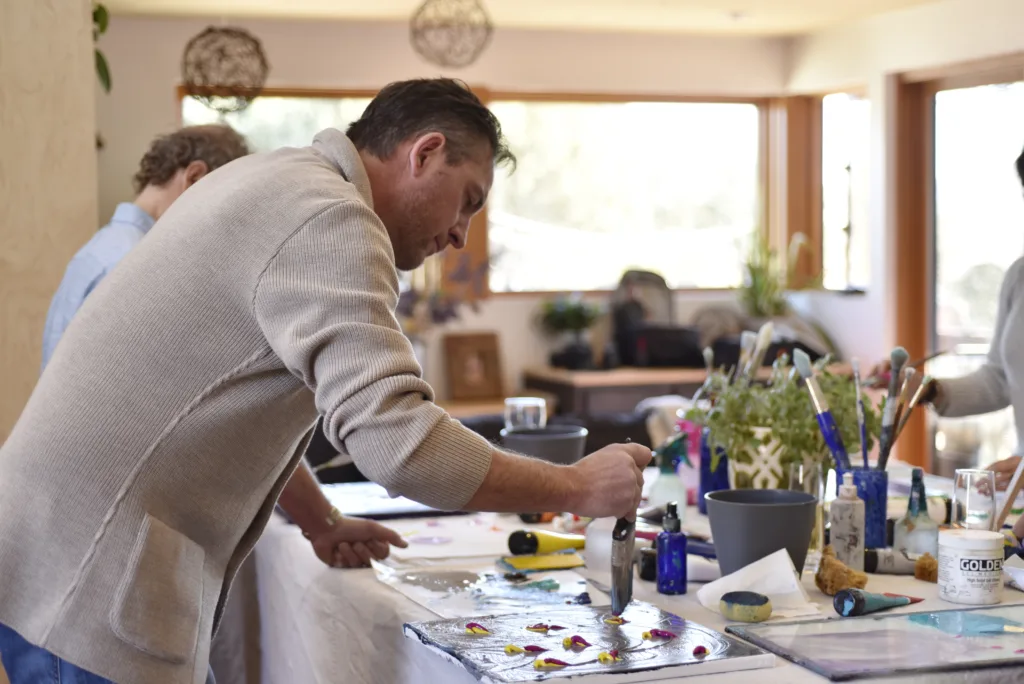
Awaken Your Artistic Voice
This is exactly what I’ll help you overcome in my upcoming challenge: Awaken Your Artistic Voice: Define Your Style Challenge.
Over 5 weeks, we’ll work through targeted exercises to uncover your unique strengths, filter inspiration, and build a roadmap toward a cohesive body of work that feels unmistakably yours.
No more scattered experiments. No more wondering which style is “really you.” It’s time to awaken your voice and step into the artist only you can be.
Stay tuned for more details — and get ready to discover the clarity and confidence your art has been waiting for. Make sure to get on my email list to learn more about this and future challenges. Choose one of the freebies below to sign up!
WANT TO LEARN MORE?
- Subscribe and get one of the FREEBIES below!
- PDF on the 8 Colors Every Artist Should Have
- PDF explaining How to Use My 5 Favorite Mediums
- Ebook on How to Move From Representational Painting to Abstraction: 5 Transformative Art Lessons
- Check out My Online Abstract Painting Course
- Read More Painting Tips Blog Posts
- Check out My Paintings & Art Prints for Sale
- Follow me on Youtube, Instagram, or Pinterest
Leave a Reply
Subscribe to get painting tips and news about my latest artwork & upcoming events.
Follow me@santafepaintingworkshops


