
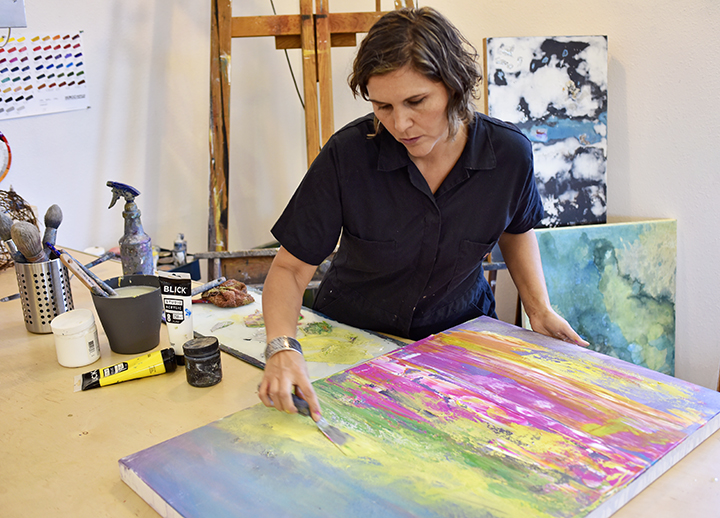
You’re painting away, having fun, letting go of perfectionism… and then you freeze.
You step back, look at the canvas, and think:
Is this done? Should I add more? Did I just ruin it with that last brushstroke?
Sound familiar?
This is hands-down the question I get asked most in my workshops and online classes:
How do I know when my painting is finished?
It’s a great question, and also one without an easy, one-size-fits-all answer.
Some artists keep working long past the point they should stop, overworking their pieces and losing the freshness and spontaneity that made them beautiful.
Others stop too soon, leaving their paintings feeling unfinished or lacking impact.
The truth is, there’s a sweet spot, but learning to recognize it takes practice.
In this post, I’ll share:
✔️ Why it’s so hard to know when to stop
✔️ Practical signs your painting might be finished
✔️ Signs it might need more work
✔️ Simple techniques you can use to evaluate your own work objectively
By the end, you’ll feel more confident about making that final call and trusting your instincts. You’ll understand how to know your painting is done and find the sweet spot in abstract art.
Why It’s Hard to Know When to Stop
Abstract painting, by nature, doesn’t have a “right” or “wrong” answer. There’s no clear subject to measure against. No reference photo to match.
That’s what makes it so freeing… and also what makes knowing when you’re done tricky.
We tend to second-guess ourselves.
Want to keep adding just one more mark.
Worry we’ve gone too far, or not far enough.
Learning to read your own work, and to stop at the right moment is a skill that develops over time.
But there are a few things you can look for along the way.
Signs Your Painting Might Be Done
Here are some practical indicators that your painting is likely finished:
1. It Feels Balanced
When you step back, does the painting feel balanced to your eye? Not necessarily symmetrical, but harmonious? If nothing jumps out as distracting or unresolved, that’s a good sign.
2. Every Area Feels Considered
Do all parts of the painting feel like they belong? Even if some areas are quiet and others are bold, does each section feel intentional?
3. You Like Looking at It
This one is simple but powerful. When you glance at it, does it feel pleasing? Do you find yourself wanting to just sit and look at it? That usually means it’s working.
4. More Changes Feel Forced
If every idea you try at this point seems to make it worse instead of better, that may be a sign it’s time to stop.
Signs Your Painting Might Need More
On the other hand, here are a few indicators you might want to keep going:
1. Large Areas Feel Blank or Unresolved
Sometimes we stop early because we’re afraid to ruin what’s working. But if big sections feel unfinished or disconnected, it might not be done yet.
2. Lack of Focal Point
Does your eye have somewhere to rest? If your painting feels scattered with nothing holding it together, try strengthening one area as a “star.”
3. The Values Feel Flat
If everything is the same level of lightness and darkness, the piece may feel dull. Adding some contrast can often bring it to life.
4. It Feels Too Safe
If the whole painting feels timid and you know you haven’t really taken risks yet, try pushing a little further.
Techniques to Evaluate Your Work
Here are a few ways to step back and “read” your painting more objectively:
Take a Break
Walk away for a few hours or even overnight. Seeing it with fresh eyes often makes it clear what it needs (or doesn’t need).
Look in a Mirror
Holding your painting up to a mirror helps you see it from a new perspective and spot areas that feel unbalanced.
Photograph It
Take a photo and look at it small on your phone. This helps you see the overall composition without getting stuck in the details.
Ask Questions
When you come back to it, ask yourself:
- Does it feel complete?
- Is there anywhere my eye gets stuck?
- Does it reflect the feeling I wanted to convey?
Sometimes the Best Paintings Happen When You Push Just Beyond
One thing I’ve noticed in my own work and in my students’ is that magic often happens just beyond your comfort zone.
If you’re not sure whether it’s done, sometimes adding one bold mark or taking one more risk is what takes the painting from “okay” to “exciting.”
It’s all part of developing your instincts.
Final Thoughts
Learning how to know when your painting is done is part art, part science, and part gut feeling.
You’ll get better at it the more you paint. You’ll start to recognize what “done” feels like to you, and that’s something no one else can decide for you.
Join My Abstraction Beyond Boundaries Challenge
If you’re tired of staring at your canvas wondering “is this done?” and ready to create bold, intentional abstract paintings with confidence, my Abstraction Beyond Boundaries Challenge (August 18-22, 2025) is for you.
For only $10, you’ll get:
✔️ 30 days of access to my step-by-step lesson on painting an abstract landscape
✔️ A private Facebook group to connect with other artists
✔️ Q&A sessions where I personally answer your questions
✔️ The exact techniques I use in my own studio to keep colors clean and compositions strong
This challenge and support is a $149 value, but you can join right now for just $10.
✨ Sign up here ✨
Whether you’re a beginner or you’ve been painting abstractly for years, you’ll come away with a deeper understanding of color, composition, and confidence in your work.
Stop struggling with mud and start creating abstract paintings you love!
In the meantime, take a deep breath, trust yourself, and remember: every painting you create teaches you something new.
ABOUT ANDREA CERMANSKI
I am an artist out of Santa Fe, New Mexico who has been painting for almost 30 years. I love to teach first-timers as well as experienced painters who need a creative reboot. My work has been displayed in several galleries around the country, and I have a Bachelor’s in Art History, a Master’s in Art Education, and had my work in a show juried by Judy Chicago. The idea of getting more people painting makes me light up as I want to inspire more people to express their creative selves and tap into a place of joy and calm.
WANT TO LEARN MORE?
- Subscribe and get one of the FREEBIES below!
- PDF explaining How to Use My 5 Favorite Mediums
- Ebook on How to Move From Representational Painting to Abstraction: 5 Transformative Art Lessons
- Take the Quiz: What Abstract Artist are you Destined to Be?
- Check out My Online Abstract Painting Course
- Read More Painting Tips Blog Posts
- Check out My Paintings & Art Prints for Sale
- Follow me on Youtube, Instagram, or Pinterest
Leave a Reply
Subscribe to get painting tips and news about my latest artwork & upcoming events.
Follow me@santafepaintingworkshops


